These past years have seen a succession of substances used for cooling and refrigeration. In the 1990’s CFCs (chlorofluorocarbons, such as Freon) were banned in most countries due to their proven damaging effect on the ozone layer. Instead, HFCs (hydrofluorocarbons), were taken into widespread use. But, while they do not harm the ozone layer, HFCs are potent greenhouse gases, and contribute to global warming. In many countries, steps are being taken to phase out HFCs.
CO2 a viable alternative
Natural refrigerants, such as CO2 are viable alternatives to HFCs, and actually effective in reducing carbon emissions as the CO2 technology is less energy consuming. Thus, the global warming potential of natural refrigerants is significantly lower than that of the synthetic gases, and they do not harm the ozone layer.
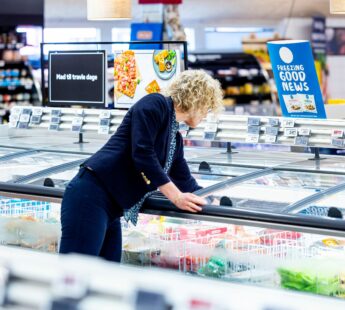
Denmark was the first country in the world to ban all synthetic gases as refrigerants, effective from 2007 – and businesses, such as supermarkets, have been quick to adopt the new technology using CO2 as a refrigerant. This is partly due to economic incentive, as the use of greenhouse gases for refrigeration is taxed.
CO2 can be used as a refrigerant or working fluid in a wide range of applications, such as air-conditioning for buildings and vehicles, commercial refrigeration and vending machines.
Magnetic refrigeration
Another alternative method of refrigeration, in which Denmark also holds a leading position, is magnetic refrigeration. This promising new technology, which is still in the early stages and not yet commercially applicable, is based on temperature changes in materials subjected to a strong magnetic field (magnetocaloric effect).
The Risoe National Laboratory for Sustainable Energy (Risø, DTU) in Denmark has built a prototype magnetic refrigeration device which is able to cool 8 degrees C. The goal is to be ready with a commercial application within a few years.
Thus, using energy more efficiently in both housing and production is an obvious step towards becoming independent of limited energy resources such as fossil fuels. And there is a large potential for doing just that. Saving energy in buildings B...
Read on about Energy EfficiencyWhile many countries have opted for individual, on-site heating and cooling solutions, Denmark decided to centralise heating and power systems decades ago in order to lower costs and reduce emissions. Since then, Denmark has developed unique solut...
Read on about Heating & CoolingBuilding Green is the largest fair in Denmark regarding sustainable and energy effective buildings. With more than 2300 visitors at the first year of the fair, we are now working on creating an even better event in 2012 with more visitors and exhi...
Read on about BUILDING GREEN 2012Copenhagen International Clean Energy Fair (CICEF), October 9-11, 2012, Bella Center, Copenhagen, Denmark. CICEF is a newly developed annually returning international business fair for the energy sector. CICEF will be a global meeting p...
Read on about Copenhagen International Cl...On 4th - 6th June 2012, the UNCSD will take place in Rio de Janeiro. Also referred to as the Rio+20 or the Earth Summit 2012 due to the initial conference held in Rio in 1992, the objectives of the Summit are: to secure renewed political commitmen...
Read on about Earth Summit 2012Alliance to Save Energy, League of Green Embassies and manufacturer’s partner to conduct a series of energy efficiency retrofits of U.S. Embassies by integrating Danfoss energy efficient thermostats.
Read on about Danfoss Thermostats to Impr...